

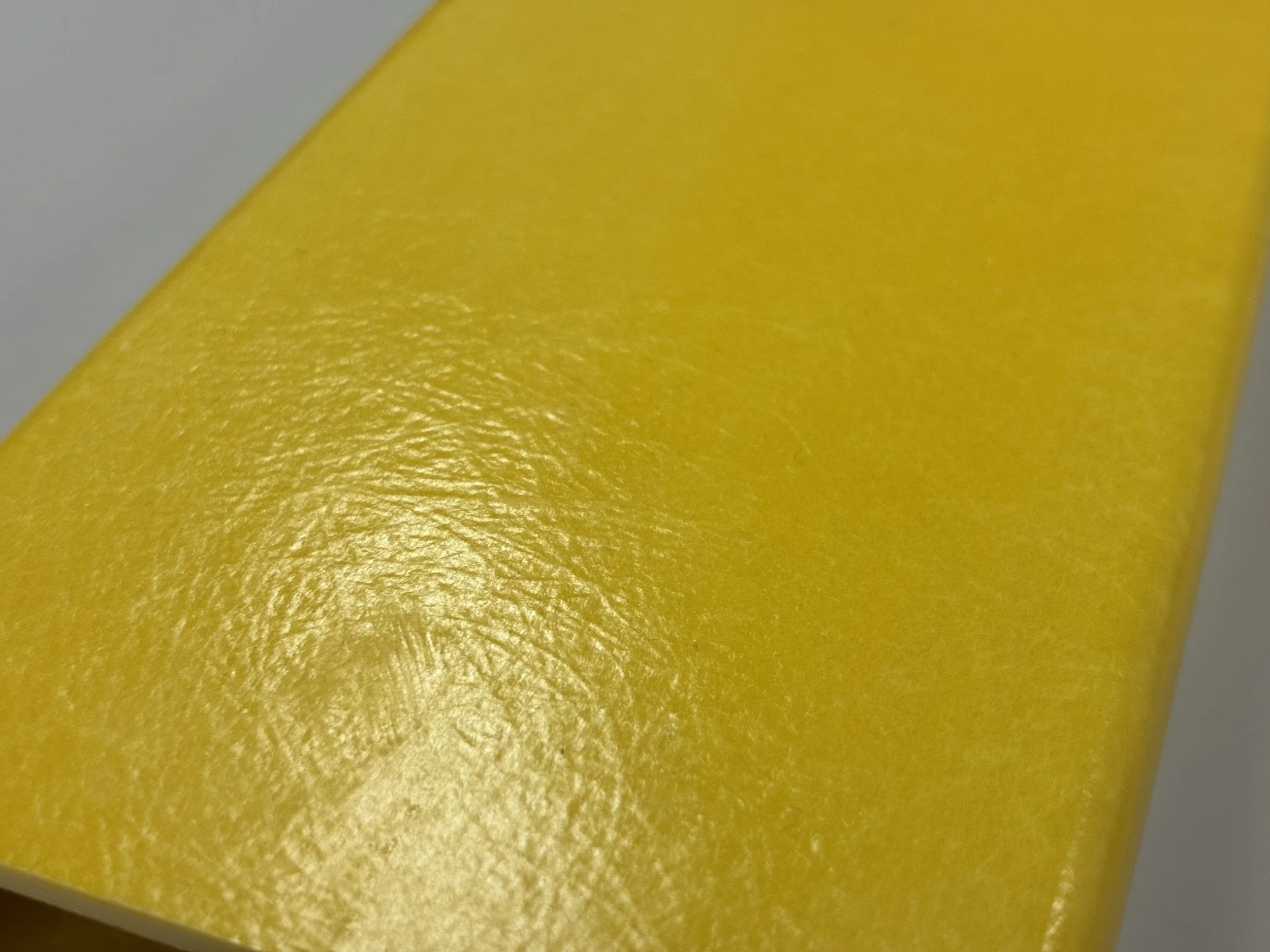
Composite Product Quality
Why a Resin-Rich Surface Finish Matters in Composite Products
In a fibre-reinforced composite, the fibres provide much of the strength and stiffness, while the resin binds those fibres together, transfers load between them and helps protect them from the surrounding environment.
A properly manufactured resin-rich outer layer can improve the surface protection, appearance and long-term durability of pultruded profiles, prepreg components and other composite products.
Surface Protection
What Does a Resin-Rich Surface Actually Do?
The outer surface is the first part of a composite product exposed to handling, weather, moisture, chemicals and mechanical contact. A continuous resin-rich layer helps separate the reinforcement from these external conditions.
Protects the Fibres
A continuous resin layer helps prevent glass or carbon fibres from being directly exposed at the product surface.
Limits Moisture Access
A well-consolidated surface can reduce direct paths for moisture to reach exposed fibres or internal defects.
Improves Surface Durability
The resin layer helps protect the reinforcement from light abrasion, handling damage and surface wear.
Creates a Better Finish
A uniform surface improves appearance and can provide a more suitable base for paint, coatings or other protective finishes.
A Simple Comparison
Why Composite Materials Are Like Reinforced Concrete
Reinforced concrete is a useful way to explain how fibre-reinforced composites work. In both systems, two different materials work together because each performs a different role.
Steel and Concrete Work Together
Fibres and Resin Work Together
Fibres without sufficient resin protection can become exposed and vulnerable. Resin without enough correctly oriented reinforcement may not provide the required structural performance.
Product Applications
How Surface Quality Applies to Pultruded and Prepreg Products
The manufacturing methods are different, but both pultruded profiles and prepreg products depend on good fibre impregnation, resin distribution, consolidation and surface control.
Pultruded Composite Profiles
Pultrusion continuously pulls fibre reinforcement through resin and a heated die to create profiles with a constant cross-section, such as rods, tubes, channels, angles and structural shapes.
- A surface veil or mat may help produce a resin-rich outer layer
- Good resin impregnation helps minimise dry fibres and voids
- Die condition and cure control influence surface consistency
- Coatings may be added for improved UV or environmental resistance
Prepreg Composite Products
Prepreg materials contain reinforcement that has already been impregnated with a controlled amount of resin. Layers are arranged, consolidated and cured to form tubes, sheets and shaped composite components.
- Outer plies influence the visible surface and fibre coverage
- Consolidation pressure helps reduce voids and surface defects
- Cure conditions affect resin flow and final surface quality
- Release films, tooling and surface plies influence the finish
Balanced Composite Design
A Resin-Rich Surface Does Not Mean Excess Resin Everywhere
- Correct Fibre Content Enough reinforcement is required to achieve the intended strength and stiffness.
- Complete Fibre Wet-Out Resin must adequately surround and bond the fibres without leaving dry areas.
- Controlled Resin Distribution Resin should be present where needed without creating unnecessary resin-rich pockets or excessive weight.
- Low Void Content Good impregnation and consolidation help reduce trapped air and internal defects.
- Suitable Surface Protection The required surface system depends on UV exposure, chemicals, wear and the intended service environment.
- Consistent Manufacturing Process control is essential for repeatable dimensions, cure, surface quality and mechanical performance.
Evaluating Product Quality
What Should Be Considered When Reviewing a Composite Surface?
Appearance is important, but surface quality should be considered together with the product's internal construction, mechanical requirements and service conditions.
Fibre Exposure
Visible fibres, dry reinforcement or fibre print-through may indicate insufficient surface resin, poor impregnation or local processing variation.
Cracks and Voids
Surface cracks, bubbles, pinholes and voids can create pathways for moisture and may indicate cure, consolidation or resin-flow issues.
Surface Consistency
A uniform finish, stable dimensions and consistent coating or resin coverage generally indicate better control of the manufacturing process.
Environmental Suitability
The required surface protection depends on sunlight, moisture, temperature, chemicals, abrasion and expected service life.
Mechanical Performance
A visually attractive surface does not prove structural quality. Fibre orientation, laminate design, void content and cure remain critical.
Verification and Testing
Inspection, dimensional checks and appropriate mechanical or environmental testing may be needed to verify product performance.
A resin-rich surface can improve protection and appearance, but it cannot compensate for poor fibre orientation, inadequate wet-out, excessive voids, incorrect cure or unsuitable material selection. High-quality composite products result from the complete material and manufacturing system—not from one visible feature alone.
Composite Product Engineering
Need Help Evaluating a Composite Product or Surface Requirement?
Composyne supports the design, material selection, manufacturing review and quality evaluation of pultruded profiles, prepreg components and other glass-fibre and carbon-fibre composite products.
Discuss Your Requirement